


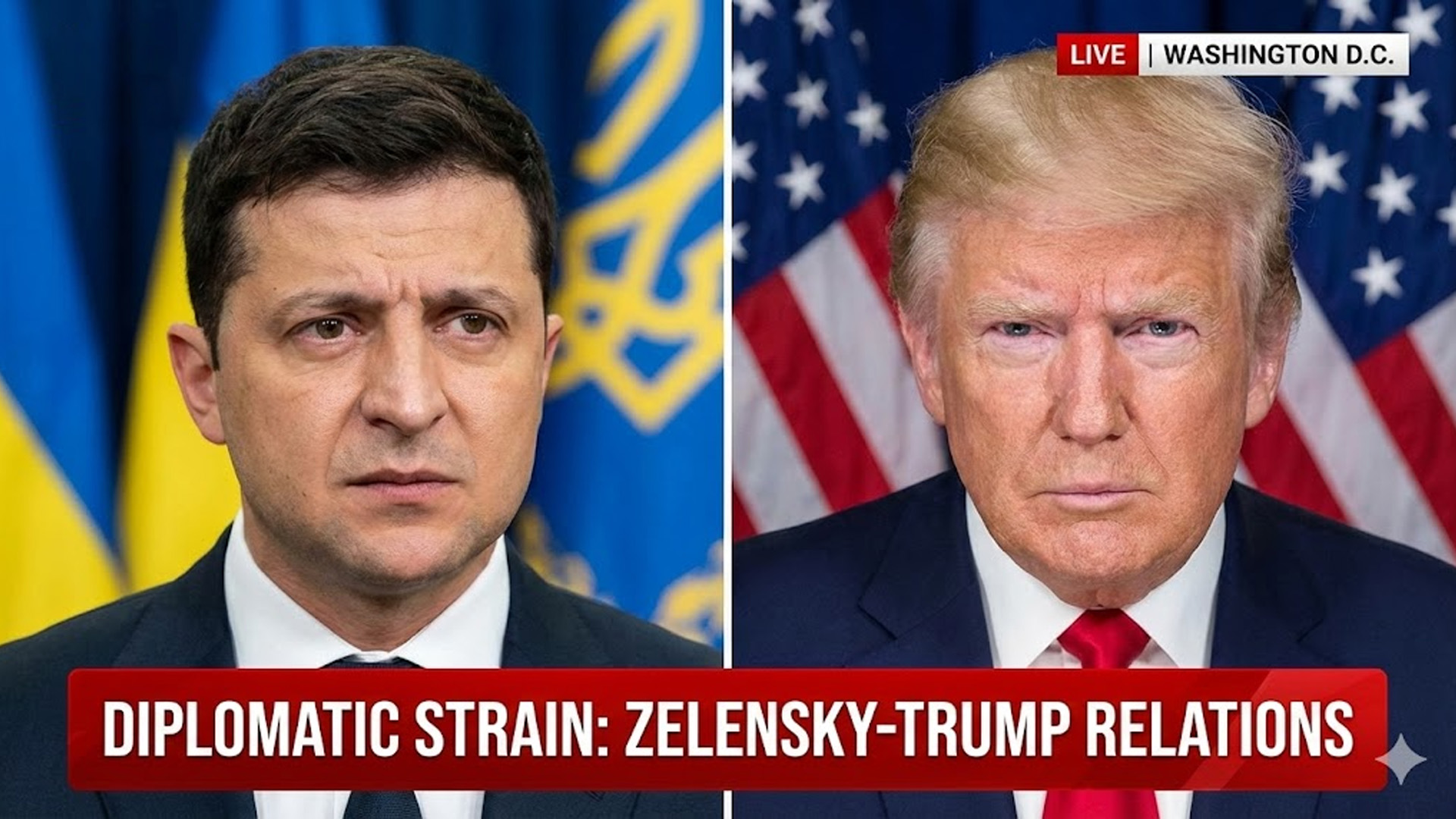
Ukrainian President Volodymyr Zelensky on Sunday adopted a noticeably conciliatory tone toward Washington after US President Donald Trump publicly accused Kyiv of showing “zero gratitude” for the latest American peace proposal aimed at ending the ongoing war with Russia. The shift came amid sensitive Geneva-based negotiations where officials from both sides are working through a controversial draft agreement that has sparked unease in Ukraine and across Europe.
President Trump had earlier taken to his Truth Social platform to express frustration, accusing Ukraine’s leadership of failing to appreciate what he described as Washington’s “EFFORTS” to broker a ceasefire. The remark refers to the 28-point peace framework authored by the US, which incorporates several terms long demanded by Moscow, including territorial concessions and restrictions on Ukraine’s future NATO membership.
Just hours later, Zelensky responded with an unusually diplomatic message posted on X. “Ukraine is grateful to the United States, to every American heart, and personally to President Trump for the assistance that — starting with the Javelins — has been saving Ukrainian lives,” he wrote, signaling an attempt to steady the diplomatic optics at a critical negotiating moment.
A Controversial Peace Blueprint and Rising Anxiety in Kyiv
The draft US proposal has caused discomfort among Ukrainian officials, defence analysts, and European governments due to key provisions that appear to align with Russia’s long-standing strategic goals. Those elements include:
✅ Requiring Ukraine to cede territory currently occupied by Russian forces
✅ A mandated reduction in Ukraine’s military capabilities
✅ A pledge to forgo NATO membership
✅ A framework allowing frozen Russian assets to be redirected toward reconstruction
For many in Kyiv, such terms risk undermining national sovereignty and validating Russian military aggression. Still, Ukrainian negotiators say the latest revisions show signs of movement. Rustem Umerov, Secretary of Ukraine’s Security Council and lead negotiator, stated that the latest document “reflects most of Ukraine’s key priorities,” though it remains under review.
Trump has set an informal deadline of November 27 — Thanksgiving Day in the United States — for Ukraine to accept or reject the proposal, but he has hinted that the timeline could be extended if progress continues.
Geneva Talks Gain Momentum
Parallel to the public messaging exchange, senior Ukrainian officials held intensive discussions in Geneva with US Secretary of State Marco Rubio, assessing whether the latest iteration of Trump’s proposal offers a viable path forward.
Rubio described the opening session as “probably the most productive and meaningful meeting” since Trump’s administration began its second term. Speaking to reporters, he said both countries would regroup for a second round of talks later the same day. “This will ultimately have to be signed off by our presidents,” Rubio added, expressing confidence that progress would lead to endorsement at the highest level.
The US delegation also included Army Secretary Dan Driscoll and Trump’s special envoy Steve Witkoff. Rubio acknowledged that any final agreement would still require Russia’s approval — an acknowledgment that further complicates the diplomatic calculus.
Political Significance of Zelensky’s Tone Shift
The Ukrainian president’s more conciliatory language is widely seen as strategic. Analysts point to several motivations:
🔹 Avoiding alienation of Ukraine’s most important military backer
Despite fluctuating rhetoric, the US remains the single largest supplier of weaponry, intelligence, and financial assistance to Ukraine.
🔹 Preventing negotiation leverage from collapsing
A hostile public exchange could weaken Kyiv’s bargaining position in Geneva.
🔹 Managing European uncertainty
European nations have expressed alarm over Trump’s unpredictable Ukraine strategy.
🔹 Preserving domestic cohesion
A perception of US withdrawal could destabilize political confidence inside Ukraine.
Trump’s approach to Ukraine has varied sharply over time — from military support to calls for rapid settlement on terms favorable to Moscow. This inconsistency has forced Kyiv to calibrate its public posture carefully.
Regional and Global Implications
The public friction comes at a delicate moment for European security. Concerns include:
✅ fears of a precedent for forced border changes
✅ doubts about NATO’s reliability
✅ uncertainty over Russia’s willingness to honor any agreement
Diplomats warn that a rushed settlement could freeze rather than resolve the conflict, enabling Russia to regroup militarily while claiming diplomatic legitimacy.
Meanwhile, the Kremlin has stayed publicly silent — a move experts interpret as tactical patience.