


⚠️ What Happened: The Allegations
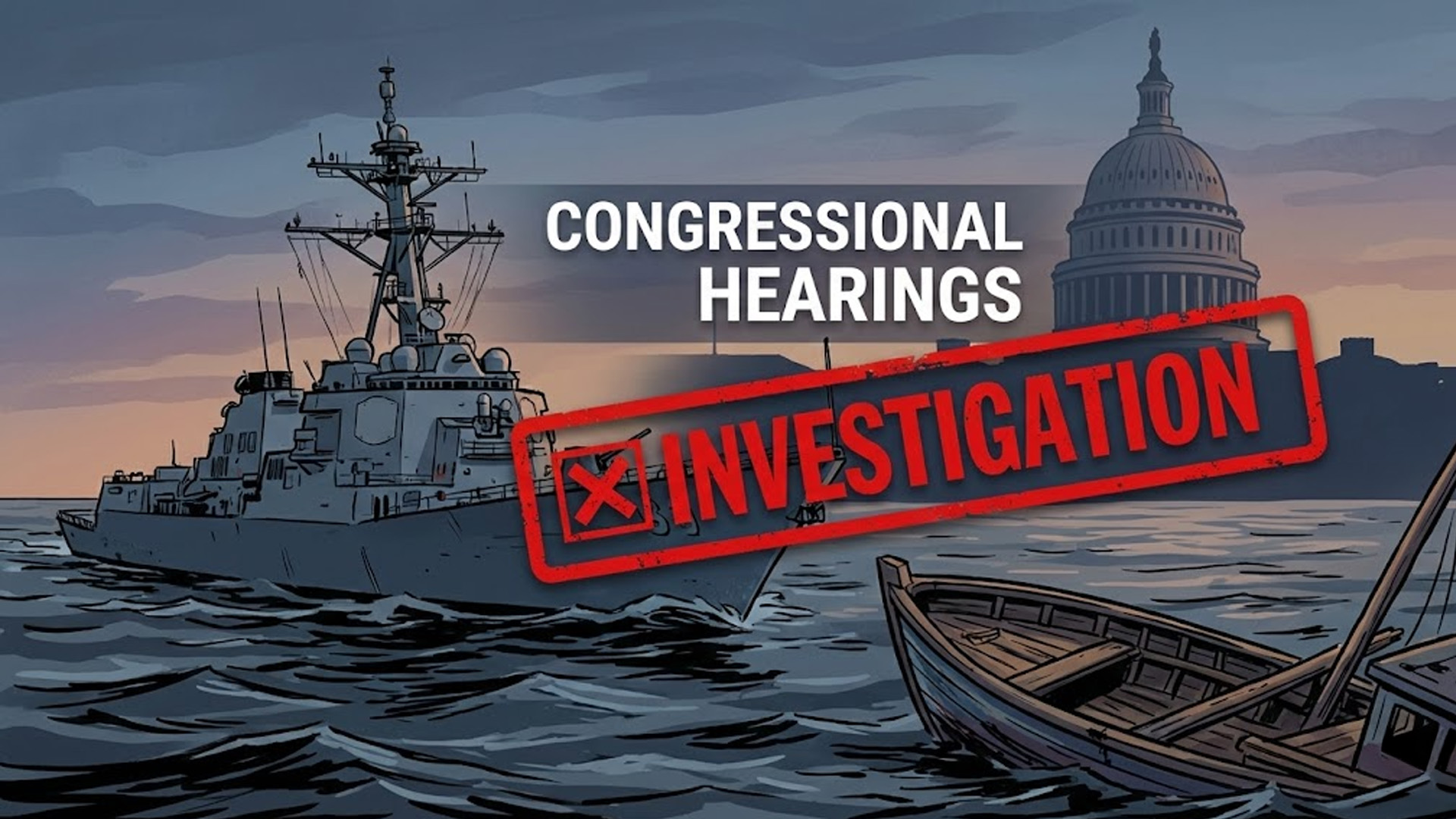
According to investigative reports, a U.S. naval strike in early September targeted a small vessel off Venezuela’s coast, described by the U.S. government as a “narco-boat.” While the first attack reportedly killed all persons aboard, later enquiries found two survivors in the water. The Washington Post reported that Hegseth then verbally ordered a second strike — effectively killing those survivors.
If proven true, this second strike could amount to a grave breach of both U.S. and international law — including the laws of armed conflict.
🏛️ Congressional Fury: Demands for Oversight & Legal Accountability
On Nov 30, lawmakers from both parties — including members of the Senate and House Armed Services Committees — formally demanded full disclosure from the Pentagon. Committees chaired by Roger Wicker (Senate) and Mike Rogers (House) have launched coordinated inquiries to examine the legality, intelligence basis, and operational conduct of the strike.
Democratic senators such as Tim Kaine and Mark Kelly have signalled that — if verified — the order would constitute a war crime under the Geneva Conventions. “It rises to the level of a war crime if it’s true,” one said.
Critics point out that U.S. military doctrine, even during operations against drug trafficking, mandates rescue or capture of survivors — not execution at sea.
🌍 International Fallout & Venezuela’s Response
The allegations have reverberated far beyond Washington. The government of Venezuela, along with its ally nations and human-rights organizations, strongly condemned the strikes — calling them extrajudicial killings and a blatant attempt at regime destabilization.
Venezuela’s National Assembly of Venezuela has announced the formation of a special committee to investigate the boat strike, even as Latin American governments and NGOs warned of a potential humanitarian and political crisis if such operations continue unchecked.
✅ What Is the U.S. Defense Side Saying
Hegseth and senior Pentagon officials have dismissed the reports as “fabricated, inflammatory and derogatory.” In public statements and social-media posts, Hegseth insisted that all operations were “lawful under both U.S. and international law.”
Meanwhile, the U.S. administration has argued the strikes are part of a broader campaign against “narco-terrorism” under what is being framed legally as a “non-international armed conflict.”
Supporters of the strikes argue they are necessary to stem the flow of narcotics into the U.S. and dismantle criminal networks — but critics warn of alarming precedents if due-process is bypassed in the name of national security.
🤔 Why This Is a Big Deal
- Legal & constitutional danger: If true, the second-strike order could violate the Geneva Conventions and U.S. laws regarding treatment of survivors at sea.
- Congressional oversight test: The investigation will test the balance of power between the executive (military & Pentagon) and legislative (Congress) over war powers and executive overreach.
- International norms at stake: Strikes on “suspected narco-boat” with no public evidence raises the risk of civilian casualties and undermines global standards for maritime law and human rights.
- Regional stability threat: The strikes heighten tensions in the Caribbean and Latin America, increasing the risk of diplomatic backlash, destabilization, and anti-U.S. sentiment.
🔭 What Happens Next
- Congress — via Senate & House Armed Services Committees — will demand a full accounting from the Pentagon, including communications logs, strike orders, intelligence reports and legal justifications.
- International investigations could be triggered, especially if evidence suggests civilians were killed or survivors executed.
- Venezuela and allied countries may escalate diplomatic protests, potentially leading to retaliatory measures or international legal action.
- For U.S. military strategy, the scrutiny may force a retrenchment, clearer rules of engagement, or greater transparency before future operations.
- The case may reshape how drug-trafficking is addressed globally — raising debate whether criminal trafficking should be treated with military force or as a law-enforcement issue.