




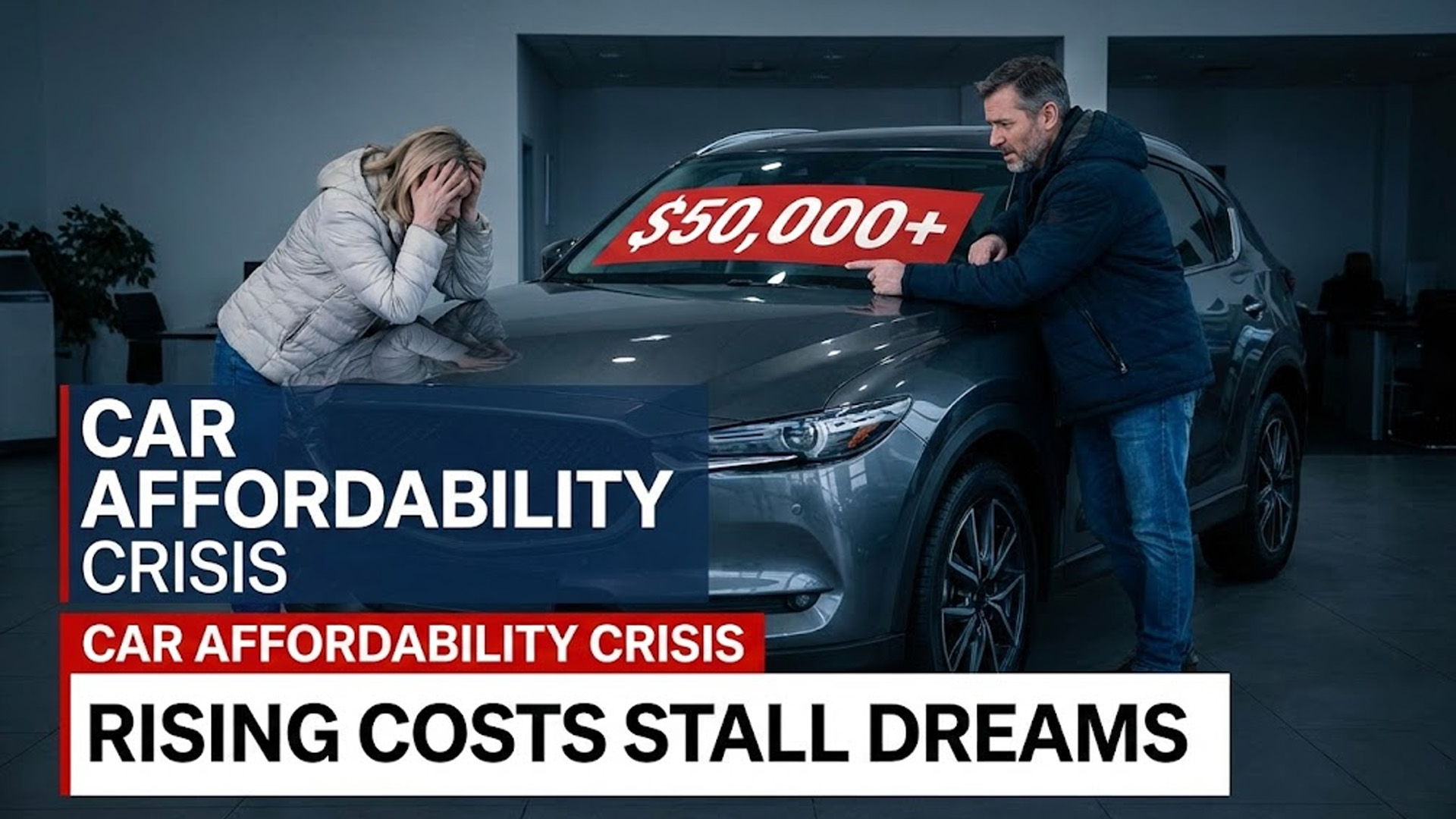
By late 2025, a palpable shift has hit the U.S. auto market: buyers are walking away from new-vehicle showrooms, opting for smaller cars, used vehicles or simply postponing their purchase altogether. The reason: soaring car prices, which for many simply no longer make sense.
According to data compiled by several auto-market trackers, the average transaction price (ATP) for a new vehicle in the United States recently crossed the $50,000 mark — a historic first. Meanwhile, the ripple effects of this steep pricing are being felt widely: prospective buyers are downsizing expectations, dealers report reduced footfall, and buyers are increasingly opting for used cars or holding on to existing vehicles longer.
🚗 What’s Causing the Price Surge?
A confluence of factors is driving car prices upward:
- 🧩 Post-pandemic supply chain disruptions — Chip shortages and production bottlenecks disrupted supply for years, shrinking inventories just as demand boomed.
- 💰 Inflation and higher manufacturing/ material costs — Rising costs for raw materials, labour, and parts have pushed automakers to increase prices.
- ⚡ Surge in premium & electric vehicle (EV) demand — More buyers gravitating toward larger, feature-rich, or EV models has skewed average prices upward.
- 🛠️ Tariffs and higher import/ production costs — Tariffs on auto parts, along with global trade frictions, have added to overall costs borne by buyers.
💸 The Fallout: What Buyers Are Doing Instead
As new-car sticker shock hits home, consumers are adjusting their strategies:
- Many are delay-buying: waiting for better deals or price corrections before committing.
- Used-car demand is rising. With new cars out of financial reach, buyers are turning to second-hand vehicles; many dealers report a noticeable uptick in requests for used cars.
- Others are choosing smaller, more affordable models rather than large or luxury vehicles.
- Some buyers are stretching loan terms or delaying purchases altogether — as many households are feeling the strain of inflation and rising loan-default rates increase.
The sale-side response is significant: dealerships are offering bigger discounts and incentives to attract hesitant buyers.
📉 Auto Market Facing a Potential Downshift
Auto-industry insiders warn that 2025 — once expected to be a boom year — may instead mark a market plateau or even decline. Dealers say foot traffic has slowed, while margins are under pressure due to higher discounting and lower sales volume.
Used-car inventory is also tightening again, and in many regions, used vehicles are priced so high that the value gap between new and used cars has narrowed significantly — making new cars only marginally more expensive than well-maintained used ones.
🧑🤝🧑 Impact on Ordinary Americans
For many Middle-class and lower-income households in the U.S., the steep rise in auto prices is more than sticker shock — it’s affecting their budgets, savings, and mobility.
- Monthly auto payments have become prohibitively high for average-income families — many find it challenging to manage car loans alongside rising housing, food, and living costs.
- Some buyers now reconsider whether vehicle ownership is worth the long-term costs, especially with increasing maintenance, insurance, and loan rates.
- For younger Americans, who already face economic headwinds and shifting ideals about transport, car ownership may increasingly seem unnecessary or unaffordable.
🔮 What It Means for the Auto Industry
Industry insiders believe the car-buying landscape in America may be undergoing a structural shift. Expectations of booming sales may need to be recalibrated. Automakers and dealers now face:
- A shrinking pool of buyers willing or able to afford new vehicles
- Growing importance of used-car markets and service/maintenance business as people hold onto old cars longer
- Pressure to produce more affordable, entry-level vehicles again — a segment that all but vanished in the recent premium-led wave.
- Need to offer value — i.e. lower prices, better financing, or more incentives — if they wish to revive demand
Some analysts foresee modest growth if automakers adapt quickly. Others warn of an extended slowdown or shrinking sales across certain segments.