



Prime focus on Congress’s 1937 stance, Emergency link
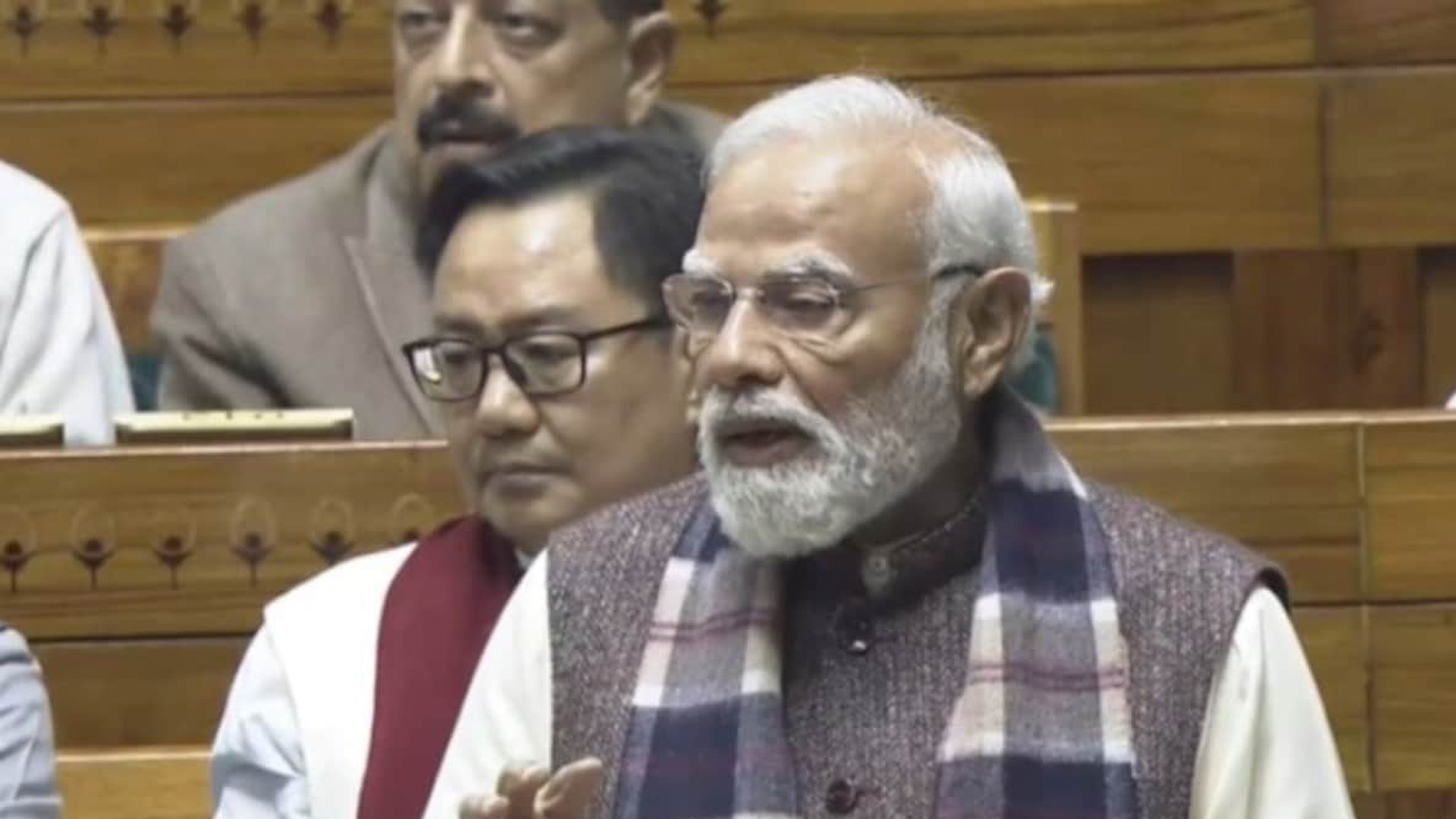
In a sharp speech in Parliament on Monday, Narendra Modi launched a scathing attack on the Indian National Congress while speaking on the 150th anniversary of the national song Vande Mataram. He accused the Congress of having disrespected the patriotic legacy of the song, aligning with flawed compromises and invoking the period of the Emergency to criticize its historical decisions.
Modi alleged that Congress — under its former leadership — had “pandered to a communal agenda” when it adopted a truncated version of Vande Mataram during its 1937 session. He described the decision as a betrayal of the song’s inclusive spirit and argued that the exclusion of several stanzas had contributed to the division of the nation.
The Prime Minister further tied the dilution of Vande Mataram to the darker period of the Emergency, declared by Congress-ruled government 50 years ago, saying that at the 100-year mark of the song, the Constitution itself had been “strangled.”
Modi called the 150th-anniversary debate a “good opportunity to restore the glory” of the song, urging the nation to remember the original version and its historic significance.
Historic context — Why this debate matters
The song Vande Mataram was penned by 19th-century Bengali writer Bankim Chandra Chatterjee in November 1875, later emerging as a powerful anthem of India’s freedom movement. Its stirring verses became a rallying cry for nationalists during the struggle against British rule.
However, in the 1937 session of Congress, then-leaders decided to drop the stanzas referencing Hindu goddesses (such as Durga, Lakshmi, and Saraswati) from public recitations, arguing that they might alienate some community members — especially Muslims who viewed religious imagery with discomfort. The compromise was seen as necessary at the time.
Congress had maintained that individuals were free to sing other songs in addition to — or instead of — Vande Mataram. Still, for many nationalists, the omission of the original verses was perceived as watering down the patriotic fervour and symbolic unity that the full version represented.
By revisiting the decision decades later, the current debate reflects ongoing tensions over how history, identity, and national symbols are interpreted, especially along communal and cultural lines.
Parliament’s renewed debate: Interpretations and sharp exchange
In his address, PM Modi accused past Congress leadership of aligning with names like Muhammad Ali Jinnah in opposing the full version of Vande Mataram because it “could irritate Muslims.”
He argued that the 1937 decision to censor the song was a significant moment of capitulation — which, in his view, “sowed the seeds of the nation’s division,” eventually culminating in Partition.
Modi framed the present 150-year celebration as a chance to reclaim that lost glory and urged the country to recognise the song’s role in freedom and national unity.
On the other hand, critics — especially from Congress — pushed back strongly. They questioned the selective historical narrative and highlighted the consequences for religious harmony and inclusivity if a communal angle is imposed on a national symbol. They posed pointed questions to the ruling party while defending the earlier decision to retain only the first two stanzas of the song.
As tensions mount, the Lok Sabha and Rajya Sabha are scheduled to hold what is anticipated to be a 10-hour marathon debate over the coming days — illuminating deeper issues about nationalism, identity, and India’s plural fabric.
Wider significance: Why this matters beyond politics
The debate over Vande Mataram is not merely about lyrics or history — it is emblematic of a broader national conversation on identity, secularism, and what it means to be Indian in a diverse society. Revisiting old decisions made in 1937 carries weight because it reflects not just on the freedoms of the past but on how national symbols continue to resonate and evolve.
Calling for restoration of the full song may appeal to those who see Vande Mataram as patriotic — but critics warn that doing so could reopen old debates around religious identity, inclusion, and communal harmony.
Given the upcoming enduring debate in Parliament, the outcome may influence the symbolic and cultural understanding of nationalism for generations to come.