



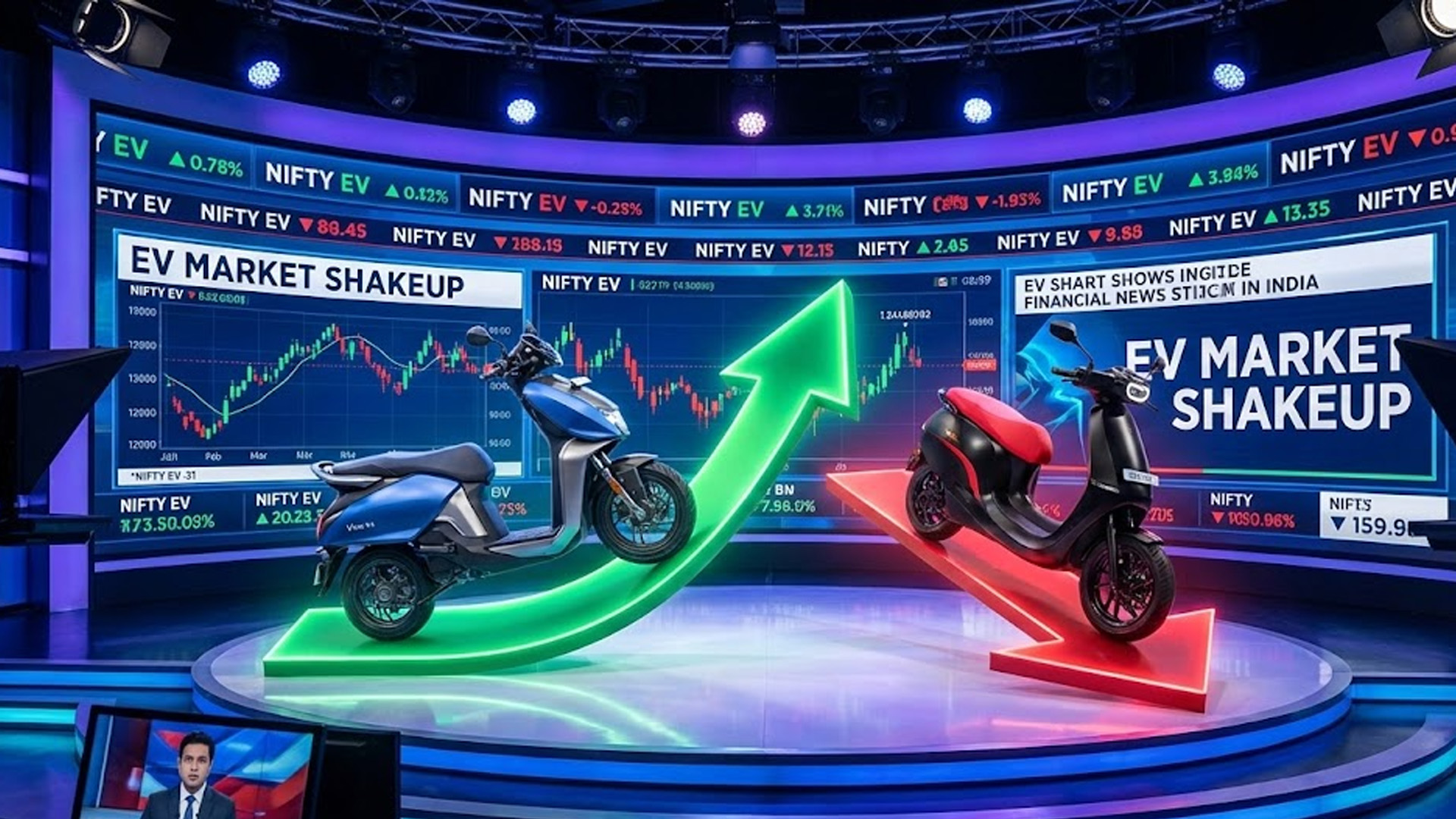
November 2025 brought a dramatic shake-up in India’s electric two-wheeler (E2W) market, as registrations plunged and rankings were overturned. According to Vahan data, total E2W registrations dropped 21% to about 110,761 units — a stark decline from October’s surge.
At the centre of this shift was Ola Electric, once the leader in the segment. The company’s monthly sales tumbled to just 8,254 units, nearly half of what it achieved in October. As a result, its market share sank below double digits to a mere 7.4%.
In a surprising turnaround, Hero MotoCorp — via its electric-scooter line Hero Vida — surged past Ola, clinching the fourth spot in the monthly rankings. Hero Vida registered 11,795 units in November, capturing a 10.6% share of the market.
🔄 Market Leaders: Who’s On Top Now?
- TVS Motor Company reclaimed the No. 1 spot in November, selling over 30,000 e-scooters.
- Bajaj Auto and Ather Energy retained the second and third positions, respectively — both continuing to register solid sales.
- Hero Vida’s ascent to fourth place demonstrates how legacy two-wheeler makers are firmly stepping up in EV space.
- Ola Electric’s drop to fifth marks a significant fall from grace, once dominating the electric scooter segment.
📉 What Went Wrong for Ola Electric?
Industry analysts point to multiple factors behind Ola’s slump:
- After a bumper festive-season month in October, demand cooled — revealing that part of the spike may have been seasonal.
- Growing competition: established players with extensive distribution, service networks, and brand trust — like TVS, Bajaj, Hero — are offering competitive EV options, eroding Ola’s market dominance.
- Market sentiment appears to be shifting in favour of proven manufacturers. As one report noted: “Traditional two-wheeler giants are strengthening their leadership.”
⚡ What the November Slump Means for Indian EV Industry
- The sharp drop in Ola’s numbers and the overall fall in E2W registrations suggest that the post-festival demand surge has plateaued.
- The competition among EV makers is heating up — and many buyers seem to prefer legacy manufacturers now entering the EV space over newer pure-play EV brands.
- For consumers, this could mean better choices, more competitive pricing and improved after-sales support as established brands expand EV portfolios.
- For EV companies, sustainability of growth — beyond launch hype — will depend on product quality, delivery, charging infrastructure, and trust.