




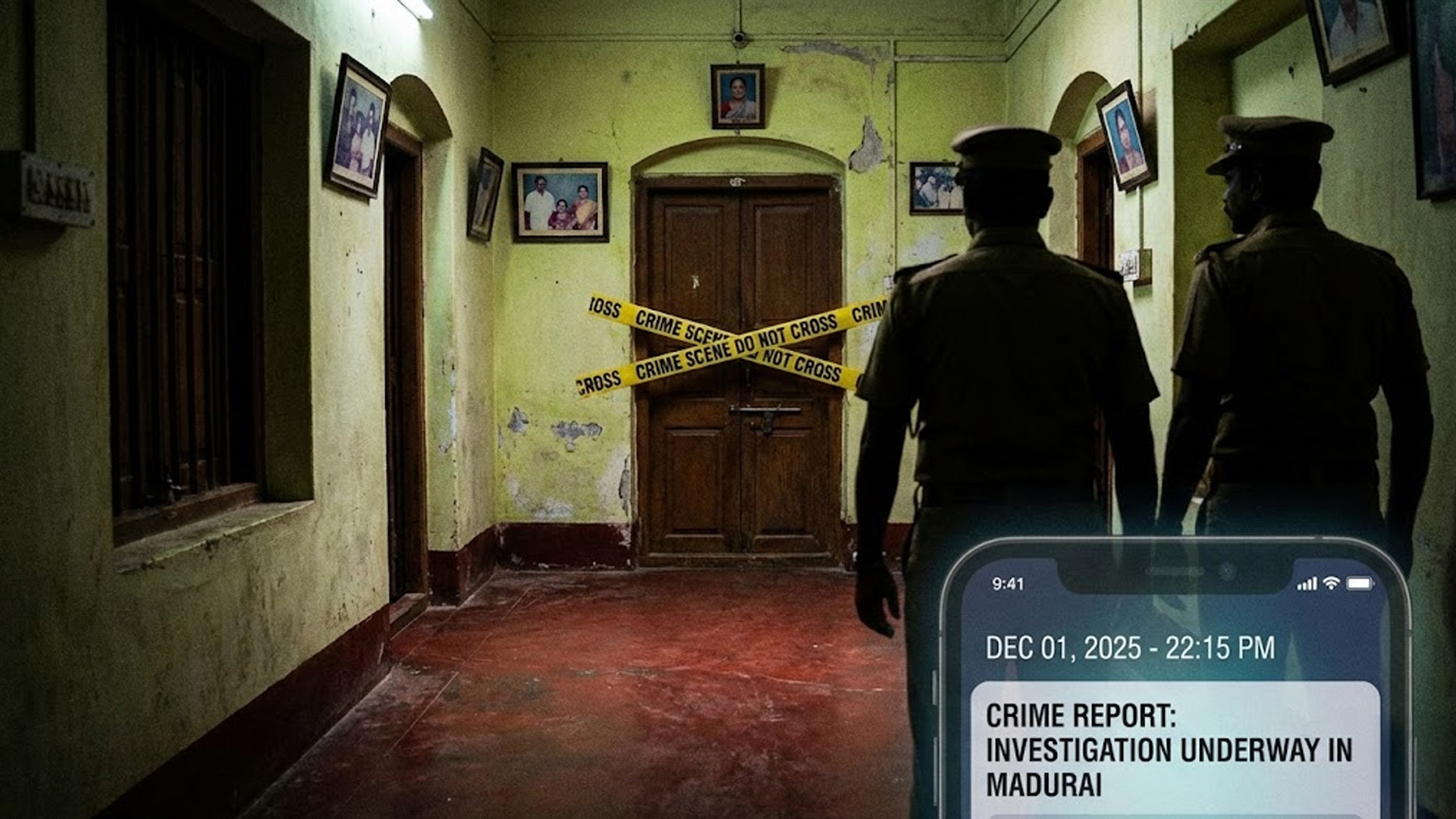
Tamil Nadu: In a chilling and deeply disturbing incident, a man allegedly killed his wife and shockingly posted a selfie with her body as his WhatsApp status. The crime has sent shockwaves across the community, prompting police action and widespread outrage.
According to initial police reports, the victim was found dead in their residence. The accused, upon committing the crime, reportedly took a photograph with the victim’s body and updated it as his WhatsApp status — a move that has horrified neighbours and the wider public.
🔎 What Happened: Timeline of Events
- The couple — name details withheld — lived together in [district/city name withheld] in Tamil Nadu. Trouble reportedly began after repeated marital discord.
- On the night of the crime, the husband allegedly strangled or physically assaulted his wife. The exact cause of death is being ascertained by forensic experts.
- Immediately after the alleged murder, the man took a selfie with the victim’s lifeless body and used it as his WhatsApp status.
- The gruesome image was seen by a relative or acquaintance, who alerted the police.
- Authorities arrived at the scene, detained the suspect, and began investigation. The body has been sent for post-mortem; a case under the appropriate sections of the law has been registered.
⚠️ Public Outrage & Police Response
The alleged act has triggered widespread condemnation across social media, among civil-society activists, and in the local community. Many have demanded swift justice, stricter punishment for gender-based violence and tighter monitoring of digital platforms that allow for such macabre displays.
A senior police officer noted: “Posting a selfie with a lifeless body is both gruesome and criminal. We are collecting digital evidence — the WhatsApp status has been saved, and the suspect is being thoroughly interrogated.”
Local women’s rights groups expressed shock and sorrow, calling the incident a grim reminder of how domestic violence can escalate when unchecked. They urged law-enforcement to act decisively and ensure speedy prosecution.
📄 Legal & Social Implications
This case sits at the disturbing intersection of heinous crime and digital recklessness:
- Posting graphic images of a corpse could lead to charges beyond murder — including obscenity, defamation of the deceased, and mental trauma to viewers (especially if minors viewed it).
- The ease with which such content spreads on social media platforms raises urgent questions about content moderation, digital accountability, and responsibility of messaging apps.
- Advocates argue for stricter laws and tighter regulation when it comes to sharing violent or graphic media online, to prevent further incidents of this nature.
🧑⚖️ What’s Next: Investigation & Justice
Police have formed multiple investigative teams to:
- Recover and preserve digital evidence (the selfie, chat-logs, device data)
- Trace who first viewed or shared the graphic status
- Conduct forensic examination to determine cause and time of death
- Register charges under relevant sections: murder, obscene content sharing, and any other applicable laws
Authorities have assured that the accused will be presented before a magistrate soon, and asked the public to refrain from sharing or circulating the image further — as it could hinder the investigation and add to the trauma of the victim’s family.
🌐 Bigger Picture: Violence Against Women in India
Sadly, this heartbreaking case is not isolated. Gender-based violence, domestic abuse and femicide continue to plague many parts of the country. Experts say such incidents often stem from deeply entrenched patriarchal norms, lack of awareness, social pressures, and inadequate reporting or intervention in early stages of domestic strife.
They urge stronger community support systems, better access to counselling, economic independence for women and more robust law-enforcement mechanisms. They also point to the urgent need for digital-platform regulation to prevent glamorisation or dissemination of criminal content.
🧭 Final Word
The Tamil Nadu incident serves as a grim warning — showing how personal violence can merge dangerously with digital platforms to amplify trauma. As the investigation unfolds, the demand for justice, stronger social protection for women, and responsible digital usage grows louder.
Authorities must ensure swift prosecution and set a precedent that such acts — both physical and digital — will not go unpunished.