



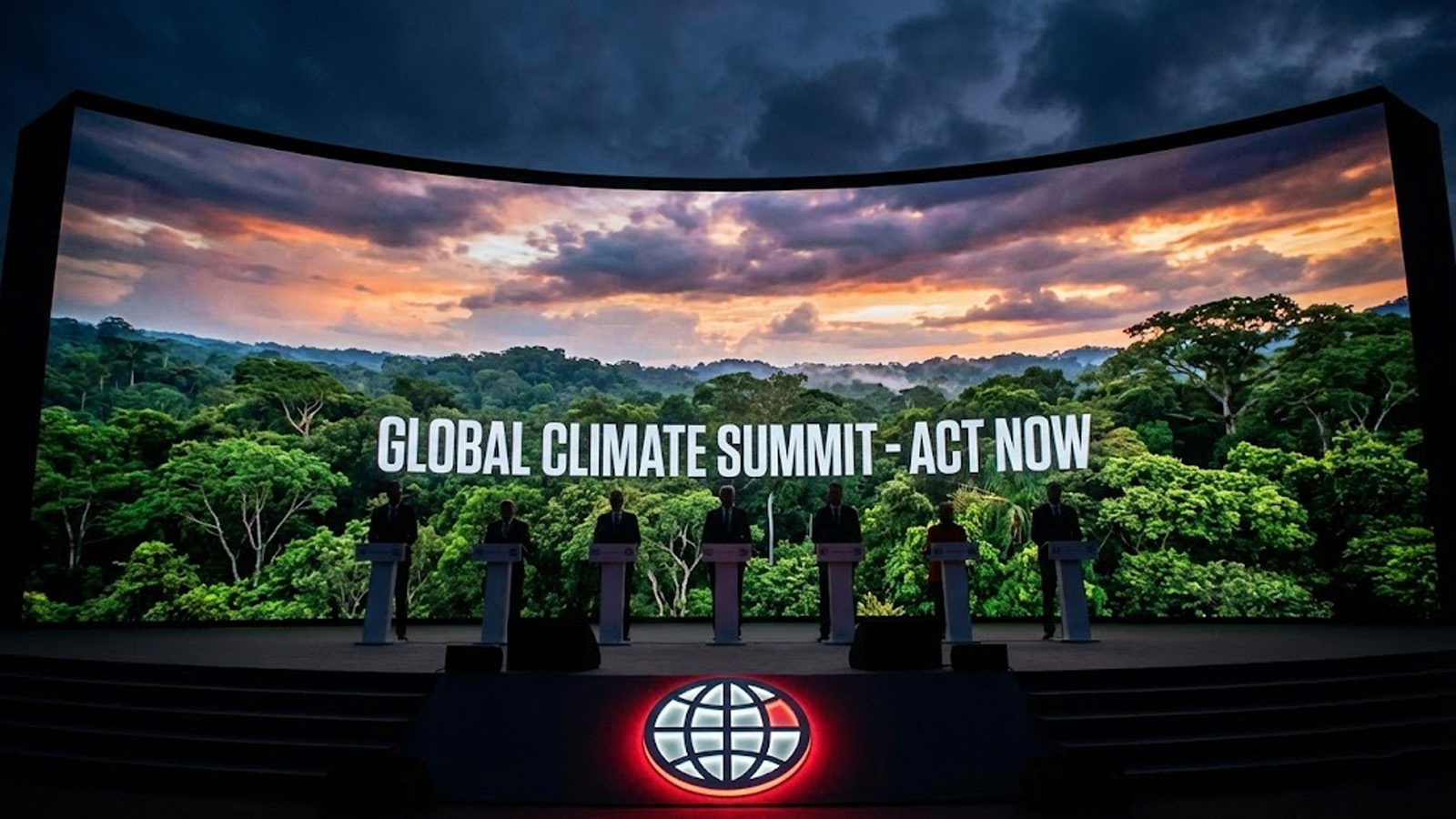
As world leaders, negotiators, scientists, activists, and global observers prepare to gather in Belém, Brazil, for the 30th United Nations Climate Change Conference (COP30) from November 10 to 21, 2025, expectations are soaring. With global warming accelerating, emissions rising, and the scientific window for limiting temperature increase rapidly shrinking, the summit is shaping up to be one of the most consequential climate diplomacy events in decades. At the heart of the negotiations lie two defining challenges: a global agreement on phasing out fossil fuels, and the growing threat of climate misinformation campaigns that seek to undermine public confidence in environmental policy.
Brazil Hosts a High-Stakes Climate Summit
COP30 arrives at a moment of intense geopolitical, ecological, and economic significance. Building on the uneven progress of previous summits, negotiators will be expected to deliver strengthened Nationally Determined Contributions (NDCs) aligned with the Paris Agreement’s 1.5°C limit. The Amazon rainforest setting underscores the urgency — a living symbol of biodiversity, carbon absorption, Indigenous stewardship, and the consequences of deforestation.
Brazil has branded COP30 as a “tropical COP,” placing nature-based solutions, ecosystem protection, and equitable energy transitions at the forefront. The summit will coincide with the latest global stocktake, assessing how far off the world remains from its climate targets and identifying gaps in emissions reduction, climate finance, adaptation, and resilience strategies.
Fossil Fuel Phase-Out: The Defining Flashpoint
No issue looms larger than the call for a full fossil fuel phase-out — a demand increasingly echoed by climate scientists, civil society groups, vulnerable nations, and environmental coalitions. Despite mounting scientific consensus, past summits have failed to reach a binding commitment to eliminate coal, oil, and gas, instead falling back on phrasing such as “phase down” or “transition away.”
At COP30, key tensions are expected to intensify:
✅ Developing nations argue:
- historical emitters should bear higher responsibility
- climate justice requires financial and technological support
- abrupt phase-outs could harm economic development
✅ Developed nations are split:
- some push for accelerated timelines
- others emphasize energy security
- fossil-fuel dependent industries lobby for slower pathways
✅ Major producers resist:
- citing revenue reliance
- advocating “abatement technologies” like carbon capture
The debate reflects not only ecological urgency but geopolitical influence and economic power. If unresolved, the deadlock risks overshadowing major agenda items such as climate adaptation, carbon markets, and loss-and-damage funding.
Climate Misinformation: The Hidden Obstacle
Adding to the complexity is the escalating wave of climate misinformation and disinformation, amplified through coordinated digital networks, political narratives, and industry-aligned messaging. These campaigns seek to:
- undermine confidence in climate science
- exaggerate costs of renewable transition
- portray warming impacts as speculative
- frame fossil fuels as indispensable
Analysts warn that COP30 could become a major target, with attempts to distort public perception and disrupt negotiations. Climate researchers describe this as a parallel “information battleground,” where facts, scientific consensus, and policy credibility are strategically attacked.
The continued presence of fossil fuel lobbyists at UN climate talks has raised further alarm, with advocacy groups calling for restrictions on influence and transparency.
Activism, Indigenous Voices, and the Carbon Budget Countdown
Beyond the official negotiating halls, COP30 is expected to witness a surge in climate activism. Youth movements, environmental organizations, and Indigenous communities — especially those from Amazonian regions — are preparing mass mobilizations demanding:
- stronger NDCs
- protection of forests and land rights
- climate finance equity
- rapid renewable deployment
Their efforts will be fueled by stark scientific warnings about the shrinking global carbon budget — the remaining emissions humanity can release while still keeping warming within 1.5°C. Current projections suggest that without drastic action, the budget could be exhausted within a few years.
For many activists, COP30 is not just another diplomatic meeting — it is a last chance turning point.